
Winter conditions and wet weather create some of the most demanding environments that 4WD operators face on remote worksites. Slippery tracks, boggy ground, reduced visibility and cold temperatures compound the risk of what is already a high-stakes operating environment.
For mining, agriculture, construction and energy sector employers who rely on 4WD vehicles for site access, this is not just a driver comfort issue. It is a risk management and compliance obligation.
Why winter conditions increase risk
The combination of cold temperatures, rain, mud and frost changes how a 4WD vehicle handles on unsealed roads and tracks. Surfaces that are stable in dry conditions can become unpredictable after rain. Vehicles that perform well in summer can behave very differently in winter, particularly on elevated tracks, creek crossings and soft ground.
For operators who drive the same route every day, familiarity can itself become a risk. Conditions that look passable may not be.
Pre-trip requirements in wet conditions
Before operating a 4WD vehicle in wet or winter conditions, operators should:
- Check track and road conditions with local authorities or site management before departure. Many routes close temporarily after significant rain.
- Confirm the vehicle is carrying appropriate recovery equipment, including a shovel, traction boards, snatch strap and rated recovery points.
- Verify that tyres are appropriate for the conditions. All-terrain tyres provide significantly more grip than standard road tyres on wet and muddy surfaces.
- Ensure waterproofing of electrical components has been maintained and that critical systems including alternators and braking have been recently inspected.
Water crossings
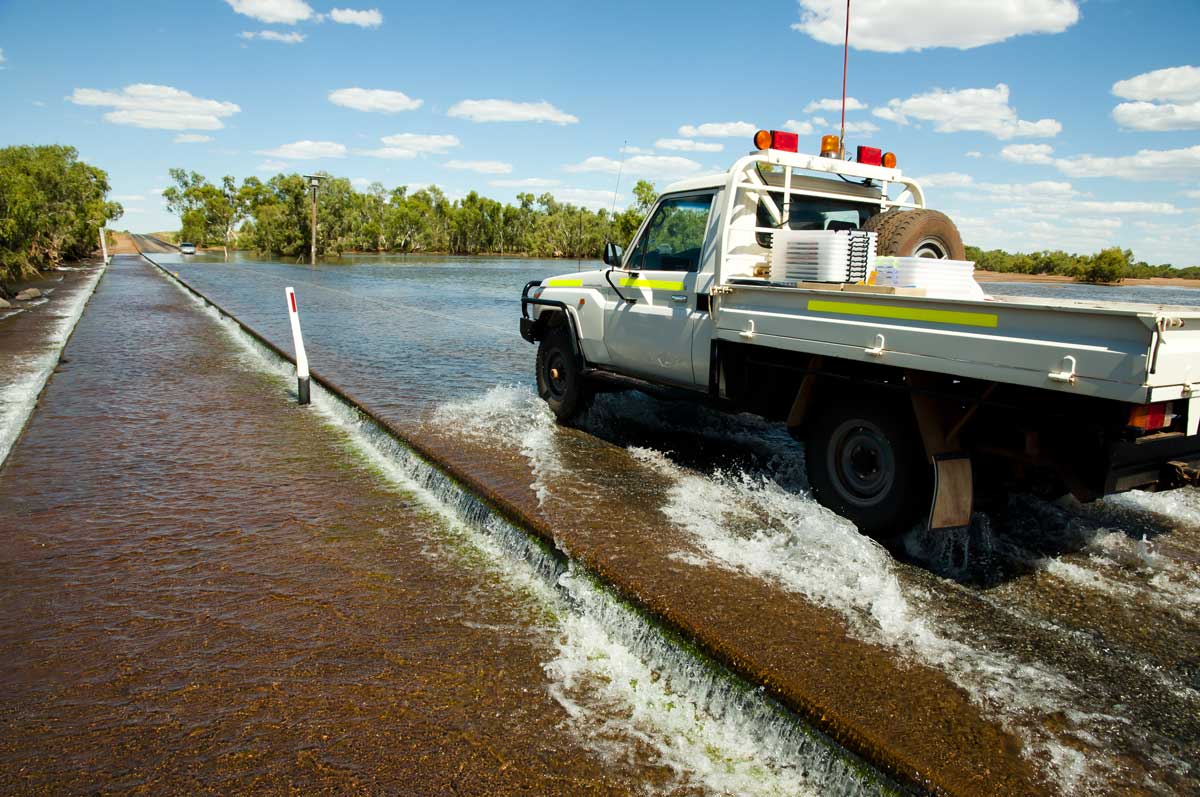
Water crossings are one of the most significant hazards in wet-weather 4WD operation. The depth and flow rate of a crossing that was passable last week may have changed significantly after rain.
Before any water crossing, operators must:
- Assess depth and current flow before committing the vehicle
- Confirm the crossing is within the vehicle’s rated capabilities
- Move at a steady, controlled pace to create a bow wave and prevent water entering the engine intake
Where water crossings are a regular part of a site route, employers should consider whether a snorkel is a practical addition to the vehicle, particularly for sites where creek levels are unpredictable.
Vehicle maintenance in wet conditions
Mud and water accelerate wear on vehicles operating off-road in winter. After operating in muddy conditions, vehicles should be cleaned thoroughly to prevent fine particles causing corrosion in joints, brakes and undercarriage components.
Maintenance schedules for fleet vehicles operating in winter conditions on remote sites should be reviewed to account for the increased frequency of wear.
The operator’s role
Employer WHS obligations extend to the environments and conditions in which their workers operate vehicles. In the context of remote and rural site access, this means ensuring that 4WD operators:
- hold current, nationally recognised training in 4WD vehicle operation
- understand how to adapt their driving technique to changing conditions
- know the recovery procedures and carry the required equipment
- have a clear protocol for reporting hazardous conditions to site management
4WD training for worksite operators
The 4WD Skill Set (RIIVEH305F, RIIVEH201E and PMASUP236) is the nationally recognised qualification for workers who operate 4WD vehicles on regulated worksites in mining, agriculture, construction and related industries. The course is delivered in a single day and covers vehicle preparation, terrain assessment, recovery techniques and safe driving practices across a range of conditions.
Link Resources delivers the 4WD Skill Set across multiple locations, with on-site delivery available for employer groups.
