

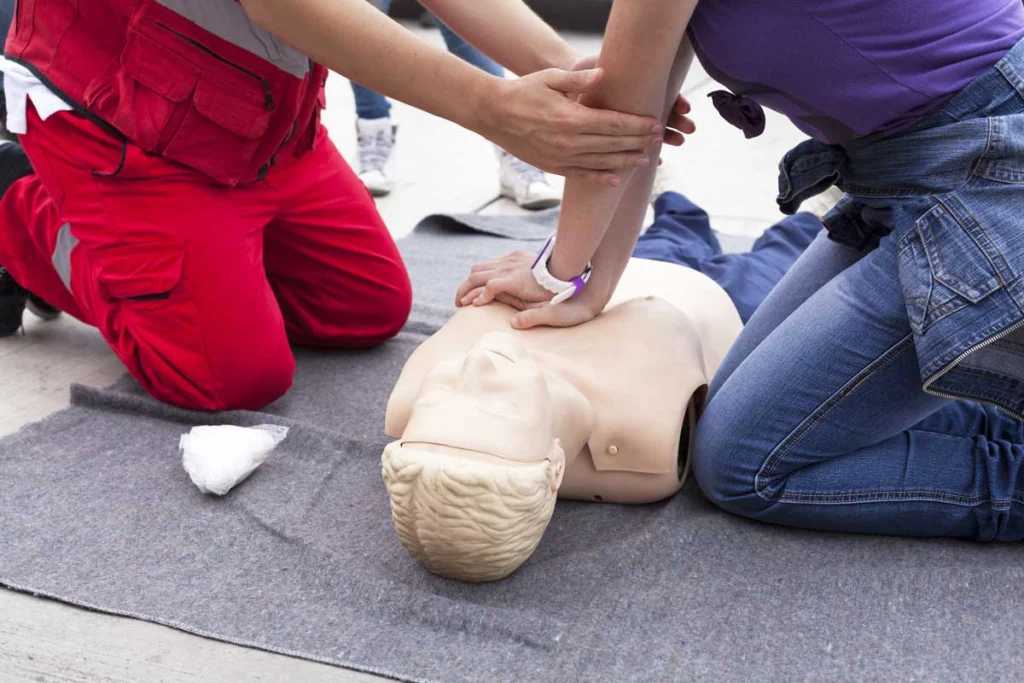
Every workplace in Australia needs a plan for first aid, but most employers set their first aider numbers once and never revisit them. Staff leave, rosters change, a crew moves onto higher risk work, and the one trained first aider ends up on night shift or annual leave.
This guide to workplace first aid requirements sets out the recommended number of first aiders for low risk, high risk and remote workplaces, how Victoria’s rules differ, what else changes the number, and how often first aiders should refresh their training.
Workplace first aid requirements: do all workplaces need a first aider?
Under the model Work Health and Safety Regulations, a person conducting a business or undertaking (PCBU) must provide first aid equipment, make sure each worker can access it, provide access to facilities for administering first aid, and ensure an adequate number of workers are trained to administer first aid. Alternatively, workers must have access to an adequate number of other people who are trained.
What counts as adequate depends on your workplace. The regulations say you must consider the nature of the work, the nature of the hazards, the size and location of the workplace, and the number and composition of workers and other people there.
In Victoria, the duty sits under the Occupational Health and Safety Act 2004, which requires employers to provide adequate facilities for the welfare of employees, including first aid.
So the short answer is yes, almost every workplace needs access to trained first aid. The real question is how many first aiders you need, and that’s where the codes of practice come in.
First aider ratios for low risk, high risk and remote workplaces
Safe Work Australia’s model Code of Practice: First aid in the workplace recommends these ratios. Queensland, South Australia and Tasmania base their first aid codes on the model code.
- Low risk workplaces: one first aider for every 50 workers
- High risk workplaces: one first aider for every 25 workers
- Remote high risk workplaces: one first aider for every 10 workers
The code is clear that high risk workplaces without timely access to medical and ambulance services should have at least one first aider for every 10 workers.
As an example, a civil contractor with 60 workers on a high risk site would need at least three first aiders (60 divided by 25, rounded up). Move that same crew to a remote site with no quick ambulance access, and the recommendation rises to six.
The ratios are a starting point. The code then takes you through five steps to refine them: the maximum number of workers on site at one time, the nature of the work, how remote the site is, the different ways your workers carry out their work, and any other factors that point to needing more first aiders.
Victoria: first aid officer numbers under the compliance code
Victoria isn’t part of the harmonised WHS system, so employers there follow WorkSafe Victoria’s First aid in the workplace compliance code (2021). It calls first aiders “first aid officers” and gives employers two options: a prescribed approach based on size and risk, or a risk assessment approach for larger or more complex workplaces.
Under the prescribed approach:
Low risk workplaces: no first aid officer is needed under 10 employees (a basic first aid kit is enough for a low risk micro business). One first aid officer for 10 to 50 employees, two for 51 to 100, three for 101 to 200, then one more for every additional 100 employees.
Higher risk workplaces: one first aid officer for up to 25 employees, two for 26 to 50, then one more for every additional 50 employees.
The code also says that, where possible, at least one first aid officer should be available at the workplace at any one time during operating hours. That means planning around shift rosters, leave and flexible work, not just counting heads.
Is your workplace low risk or high risk?
The model code describes low risk workplaces as ones where workers are less likely to be exposed to hazards that could cause serious injury or illness, such as offices, shops and libraries.
High risk workplaces are ones where workers are exposed to hazards that could result in serious injury or illness needing first aid. The code’s examples include workplaces where workers:
- use hazardous machinery, such as mobile plant, chainsaws, power presses and lathes
- use hazardous substances, such as in chemical manufacturing, laboratories, horticulture and food manufacturing
- are at risk of falls that could cause serious injury, such as in construction and stevedoring
- carry out hazardous work, such as confined spaces, welding, demolition, electrical work and abrasive blasting
- are exposed to the risk of physical violence
- work in extreme heat or cold, such as foundries and prolonged outdoor work
If your workplace has both, such as an office attached to a workshop, plan for the higher risk. Victoria’s compliance code says this directly.
Most of the industries we train every week, including construction, civil, utilities, mining, agriculture and manufacturing, sit on the high risk side.
What else changes the number
Head count and risk level are only part of the picture. The model code asks you to look at:
Shift work and overtime. Count first aiders per shift, not per payroll. Three first aiders all on day shift leave the night crew uncovered.
Leave and turnover. If your only first aider is on holidays, you have no first aider.
Seasonal peaks. Harvest, shutdowns and project ramp ups can double a workforce in weeks.
Lone and mobile workers. Couriers, sales reps, tradespeople and farmhands may work alone or across many sites. The code accepts it may not be practicable to have a first aider with them at all times, but they must still be able to access first aid, through an effective way of contacting emergency services or first aiders, and the information and training to respond if something serious happens.
Other people on site. Workplaces with large numbers of visitors, customers or the public may need more first aiders.
How often do first aiders need refresher training?
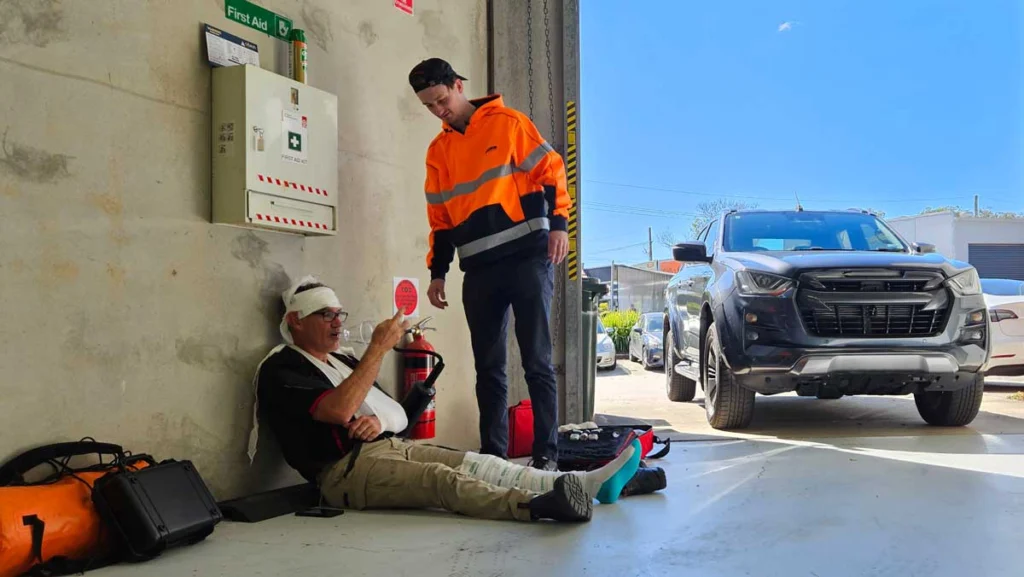
Both Safe Work Australia’s model code and WorkSafe Victoria’s compliance code say the same thing: refresher training in CPR should be carried out annually, and first aid qualifications should be renewed every three years.
CPR is the skill that fades fastest, which is why it’s on a 12 month cycle. A simple first aider register with each person’s last CPR and First Aid dates makes it easy to book refreshers before anyone lapses.
As a minimum, both codes expect first aiders to hold a nationally recognised Statement of Attainment for Provide First Aid (HLTAID011), issued by a registered training organisation.
Extra training for higher risk work
Some workplaces need more than standard first aid. The codes list situations where additional or higher level training may be needed, including:
- remote or isolated work
- risks from hazardous substances or dangerous goods
- specialist first aid equipment or a first aid room at the workplace
- workers with existing medical conditions that may need first aid
- diving or hazardous atmosphere work, where advanced resuscitation and oxygen may be needed (Victoria)
For crews working on or near live low voltage electrical equipment, Low Voltage Rescue and CPR (UETDRMP018 Perform rescue from a live low voltage panel, HLTAID009 Provide cardiopulmonary resuscitation) adds the skills to safely free and resuscitate someone in contact with a live panel.
Training your first aiders
First Aid (HLTAID011 Provide First Aid, delivered with HLTAID009 Provide cardiopulmonary resuscitation) is a 1 day, nationally recognised course. It covers recognising and assessing an emergency, keeping yourself and others safe, CPR in line with Australian Resuscitation Council guidelines, bleeding, fractures, burns and more.
Public courses run at our facilities in Adelaide (Kilburn), Brisbane (Cannon Hill), Sunshine Coast (Warana), Devonport (Spreyton), Launceston (Prospect), Melbourne (Cheltenham) and Gippsland (Traralgon East). We also run CPR (HLTAID009 Provide cardiopulmonary resuscitation) as a half day refresher.
Training a group? Book a dedicated facility day so your team has a classroom to itself on a date that suits your roster, or for teams of 6 or more, we can send a trainer to your worksite.
Funding may help. In South Australia, CITB funding may cover part of the First Aid and CPR course fee for eligible construction workers. In Tasmania, eligible workers may have 60% of their course fee covered by Keystone funding at Devonport. Conditions apply to both, so talk to our team to check your eligibility.
Frequently asked questions
How many first aiders do I need for 100 employees?
Under Safe Work Australia’s model code, a low risk workplace with 100 workers needs two first aiders, a high risk workplace needs four, and a remote high risk workplace needs ten. In Victoria, the compliance code’s prescribed approach calls for two first aid officers in a low risk workplace with 51 to 100 employees, and three in a higher risk workplace with 51 to 100 employees.
Is it a legal requirement to have a first aider at work?
Under the model WHS Regulations, a PCBU must ensure an adequate number of workers are trained to administer first aid, or that workers have access to an adequate number of other trained people. The codes of practice explain how to work out what’s adequate. In Victoria, employers must provide adequate welfare facilities, including first aid, under the OHS Act 2004. A low risk Victorian business with fewer than 10 employees can meet its duty with a basic first aid kit.
What’s the difference between a first aider and a first aid officer?
They’re the same role. Safe Work Australia’s model code and the codes based on it use “first aider”. WorkSafe Victoria’s compliance code uses “first aid officer”. Both refer to a worker trained to administer first aid, holding at least Provide First Aid (HLTAID011) or equivalent.
Is a construction site a high risk workplace?
Generally, yes. The model code lists the risk of falls that could result in serious injury, such as in construction, as an example of a high risk workplace. Mobile plant, electrical work, confined spaces and demolition are also on its list. Most construction sites should plan on at least one first aider for every 25 workers.
When does a workplace need a first aid room?
The model code recommends a first aid room for low risk workplaces with 200 workers or more, and high risk workplaces with 100 workers or more. It also suggests one wherever a risk assessment shows it would be difficult to administer first aid without it. Victoria’s compliance code sets its own table.
How often do you need to renew First Aid and CPR in Australia?
Both the model code and Victoria’s compliance code recommend refresher training in CPR every 12 months and renewing first aid qualifications every three years.
Do I need a first aider on every shift?
Plan for it. Victoria’s compliance code says that, where possible, at least one first aid officer should be available at the workplace at any one time during operating hours. The model code lists shift work and overtime as factors that may mean you need more first aiders. If a shift has no trained first aider, it has no first aid cover.