

Key takeaways
- Any task where a fall could cause injury requires planning, controls and competent workers in place.
- Ladders are intended for short-duration work and must be selected and positioned correctly to reduce risk.
- WHS legislation places clear responsibilities on businesses to manage fall hazards, maintain equipment and verify worker competency.
- Nationally recognised training such as RIIWHS204E – Work safely at heights supports safer decisions and more consistent standards across site.
Understanding working at heights, ladder safety and fall prevention
Working at heights is not just about how far off the ground someone is standing or how tall the ladder happens to be. It comes down to risk exposure. If there is any real chance of a fall that could cause harm, the job needs to be properly planned and controlled, no matter how minor the height may seem at first glance.
Ladders and other access equipment are used every day across utilities, maintenance, local government, and construction industries. They are easy to move, quick to set up, and familiar to most workers, which is often why the hazards are underestimated. However, each year, more than 1,000 Queenslanders are hospitalised after ladder falls, and many of those incidents happen during short, routine jobs that didn’t appear dangerous at the time.
While there is no specific “ladder licence” or “ladder safety certification” in Australia, ladder use is covered under WHS legislation relating to fall risk. Employers have a duty under the Work Health and Safety Act to manage the risk of falls, provide suitable equipment, and ensure workers are trained and competent.
Link Resources recommends that anyone working at height, or responsible for those who do, complete the nationally recognised Working at Heights training through Link Resources supports safer, more consistent performance at height.
What is ladder & access equipment safety?
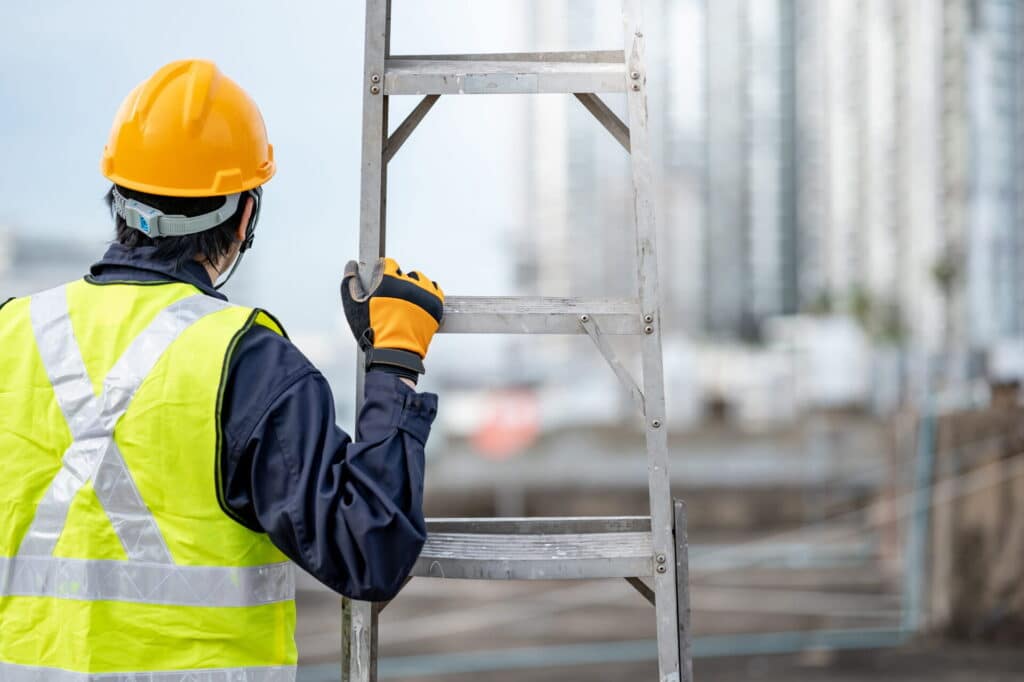
Ladder and access equipment safety is about choosing the right equipment for the task, setting it up correctly, and making sure the person using it is competent to do so. It applies to a range of common tools used across construction, maintenance, utilities and council works, including:
- Portable extension ladders – typically used for short-duration access tasks where a fixed platform isn’t practical
- Platform ladders – feature a standing platform and guardrails at the top, offering greater stability for tasks requiring hands-free work at height
- Step ladders (A-frame ladder) – self-supporting ladders suited to lower-height work and indoor tasks
- Mobile scaffold towers – provide a larger, more stable working platform for jobs requiring two hands or a longer time at height
- MEWPs (Elevated Work Platforms) – powered access equipment designed for safer positioning and movement at height
Across all of these ladders, the core safety protocols remain the same: stability, correct setup and competent use. Without a clear safety process or formal training, judgement is often made on convenience rather than risk. A documented approach helps teams assess the task properly, select suitable equipment and apply consistent controls across site.
Legal & regulatory requirements
Ladder and access equipment use is governed by the Work Health and Safety Act and Regulations across Australia. There is no standalone “ladder licence”, but that does not mean employers don’t have a legal responsibility. Businesses are required to manage fall risks, provide appropriate equipment, and confirm that workers are competent to perform the task safely.
For portable ladders, the Australian Standard AS 1892 – Portable Ladders sets out requirements for design, testing and safe use. SafeWork guidance across the states reinforces that ladders are intended for short-duration, lower-risk tasks and should not be used in place of more secure access systems when safer options are reasonably available.
Under WHS legislation, the primary duty sits with the PCBU, or person conducting a business or undertaking. That responsibility covers selecting appropriate equipment, maintaining it in safe working order and providing training relevant to the risks involved. Workers also have obligations to follow procedures and report unsafe conditions.
Ladder safety guidelines
Using a ladder safely starts well before anyone steps onto the first rung. Besides ensuring the person using the ladder is physically capable, trained, and confident, a few practical checks and clear limits around how the task will be carried out go a long way in reducing incidents on site.
Pre-use checks
Before setting up, take a moment to assess the environment. Check the ground level for stability and slope, and look for overhead obstructions or nearby electrical hazards that could affect positioning. Weather conditions such as wind and rain can also change the level of risk.
- Inspect the ladder for cracks, bent rails or missing components
- Confirm the ladder is suitable for the task, location, and conditions
Choose the right ladder
The ladder must suit both the task and the worker. Confirm the ladder height allows access without overreaching, and check the working load limit covers the worker and any tools being used. For extension ladders, the rails should extend at least one metre above the landing point, and users should avoid standing above the safe standing level, typically below the third rung from the top.
- Match the right ladder type to the duration and nature of the job
- Avoid using ladders for tasks better suited to platforms or other fall protection systems
Safe setup & climbing technique
Extension ladders should be positioned using the 4:1 angle rule on firm, level ground. If even ground isn’t possible, use a suitable ladder that includes ladder safety devices such as leg levellers and anti-slip gutter guards.
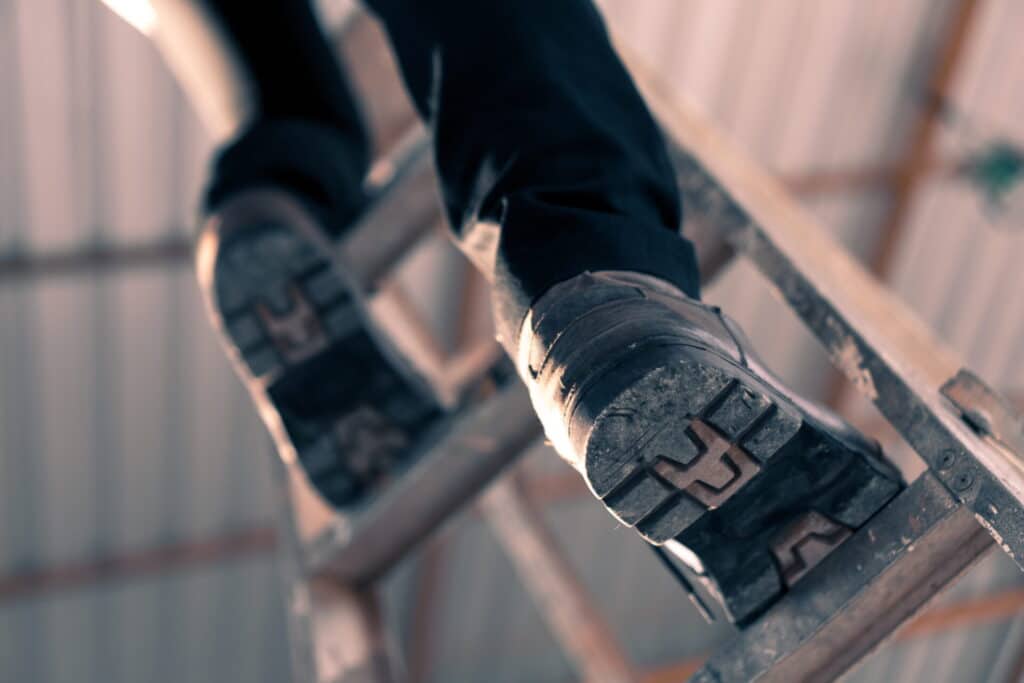
- Maintain three points of contact while climbing (two feet and one hand, one foot and two hands)
- Keep hands free by using tool belts or lifting tools separately
Managing fatigue
Ladders are designed for short-duration work. If a task requires prolonged time at height or constant two-handed work, reassess the setup.
- Rotate workers every 30 to 60 minutes for longer tasks
- Stop work and review controls if conditions change
Consistent application of these steps supports safer outcomes when working at height.
Inspection & maintenance
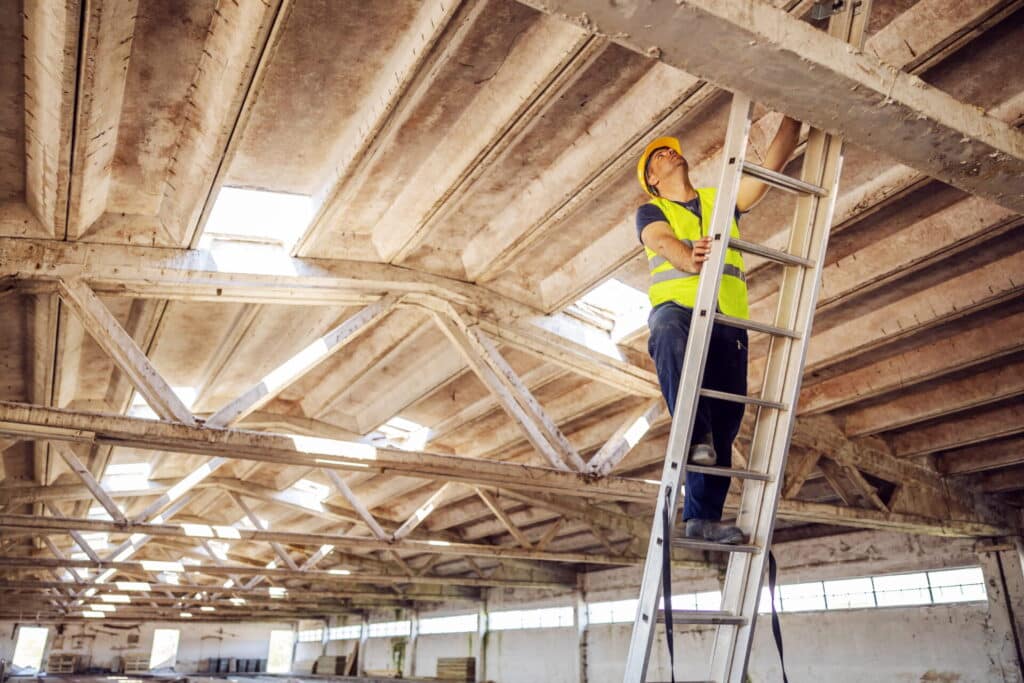
Ladders should be checked before every use, not just during scheduled audits. A competent user or site supervisor should carry out a quick pre-start inspection to confirm the ladder is safe for the task ahead. This includes looking for cracks, bent rails, loose fittings, corrosion, worn feet or any missing components that could affect stability.
In addition to daily checks, workplaces should implement periodic inspections, such as weekly site reviews or annual formal inspections, depending on usage and environment. Any damaged ladder must be clearly tagged out of service and removed from use immediately.
Training & competency
If you or your employees are working with ladders on site, formal Working at Heights training should be considered part of your safety framework. Ladders may be familiar equipment, but familiarity does not remove the risk of a fall. Even routine tasks require workers to understand hazards, apply controls and make sound decisions on site.
RIIWHS204E – Work Safely at Heights provides practical training in hazard identification, risk assessment, equipment selection and emergency response. It supports trades, supervisors and safety personnel in determining when a ladder is appropriate and when alternative access systems or higher-level controls are required.
Strengthen your workplace ladder safety standards with Link Resources
Ladder and access equipment safety comes down to clear procedures, well-maintained equipment and workers who understand the limits of the task in front of them. Applying the right controls and reviewing practices regularly helps reduce unnecessary risk and keeps compliance on track.
For teams looking to build capability and strengthen site standards, nationally recognised Working at Heights training through Link Resources supports safer, more consistent performance at height.

Tiffany Irving is a highly experienced Safety, Health and Environment professional with over 15 years of expertise across high-risk industries including mining, oil and gas, construction, rail, utilities, infrastructure and manufacturing. She has extensive experience supporting organisations to manage critical safety risks, particularly in high-hazard environments such as working at heights, confined spaces and permit-controlled worksites.
Throughout her career, Tiffany has developed, implemented and audited Safety Management Systems aligned with Australian legislation, industry Codes of Practice, and international standards including ISO and AS compliance frameworks. Her depth of knowledge in WHS legislative requirements, contractor management, risk controls and governance makes her a trusted advisor across multiple sectors.
Tiffany holds a tertiary qualifications in Workplace Health & Safety, and Training & Assessment, along with qualifications in Height Safety and Confined Space Entry. Having held senior safety leadership roles with organisations such as BHP, Unity Water, Komatsu, Queensland Rail and Terrex Seismic, she is passionate about delivering practical, quality & compliance-driven training that builds capability, confidence and a strong safety culture in the workplace.
